

The Global Golfer · Course Intelligence · Mpumalanga · Safari Golf
Leopard Creek Country Club
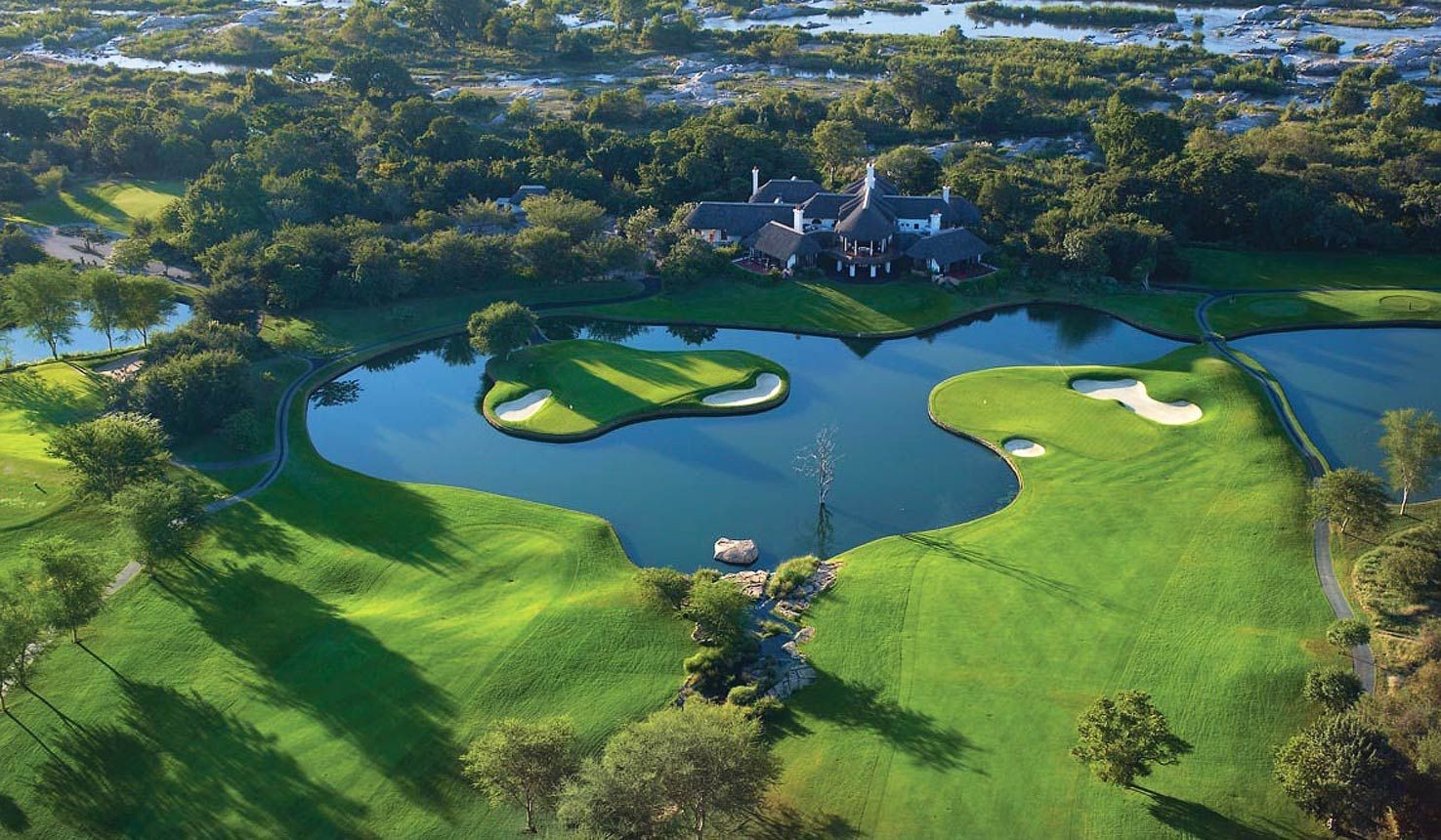
Leopard Creek Country Club sits beside the Crocodile River near Malalane, directly alongside Kruger National Park. Its identity is inseparable from that setting: championship golf, Lowveld heat, water, wildlife and a private-estate environment combine to create a course experience unlike a conventional resort round.
The course is a long-established host of the Alfred Dunhill Championship and is best treated as a destination round that must be planned together with the accommodation and access route.
Why play Leopard Creek
The strategic challenge is shaped by elevation change, large water features, defended greens and the need to manage both heat and risk. Several holes interact directly with the Crocodile River or major water hazards, making club selection and positioning more important than aggressive distance alone.
The setting also changes the rhythm of the day. Wildlife, heat and the private-club access model mean this is not a course to slot casually into a packed itinerary; the golf, lodge and transfer plan need to work together.
Course character
- Setting: Lowveld landscape beside the Crocodile River and Kruger National Park.
- Water: major hazards shape several of the most important strategic decisions.
- Elevation: changes in level affect both visual judgement and effective yardage.
- Greens: approach position and distance control matter more than raw power.
- Conditions: heat, firm turf and seasonal weather patterns influence pace, hydration and club selection.
Notable holes
The 9th closes the outward half around a major water hazard and asks the golfer to balance distance against the risk of bringing the lake too aggressively into play.
The 13th is one of the course’s strongest visual moments, with the Crocodile River and Kruger beyond the green complex.
The 18th returns to the water for a demanding finish where placement and approach control can decide the round.
Playing intelligence
Prioritise position. Water and changing elevation punish overly aggressive lines quickly.
Manage the heat. Hydration and pacing are part of performance in the Lowveld, particularly when the round sits inside a longer safari itinerary.
Respect elevation. Visual distance can be deceptive; rely on measured carry numbers rather than appearance alone.
Play the green complex, not just the flag. Positioning the approach on the correct section of the putting surface can be more valuable than chasing a tight pin.
Visitor access
Leopard Creek does not operate a normal public tee sheet. Visitor access is available only on certain days in limited off-peak periods and must be arranged through one of the club’s approved associate lodges.
For the current published period, the club lists visitor availability mainly on selected Mondays, Wednesdays, Thursdays and some Sunday afternoons, subject to member bookings, events, maintenance and South African holiday periods.
The club currently lists a visitor green fee of ZAR 8,500 per person, including a golf cart and halfway-house offering, valid until 28 February 2027. These terms are date-sensitive and should be reconfirmed directly through the chosen associate lodge before travel.
Stay · Play · Recover
Stay: choose an approved associate lodge first, because that booking route is what unlocks visitor golf.
Play: build the tee time around the lodge and safari schedule rather than treating the golf as an independent booking.
Recover: account for heat, travel and early safari starts. Hydration, sleep and a lighter post-round schedule can matter more here than adding another activity.
Continue the journey
Use Find a Golf Course to continue exploring South African course profiles, or move through TGG’s South Africa destination coverage when building the wider route.
Editorial note: visitor access, approved lodges, tee-time days, green fees and course availability can change. Confirm current conditions directly with Leopard Creek and the associate lodge before making travel plans.