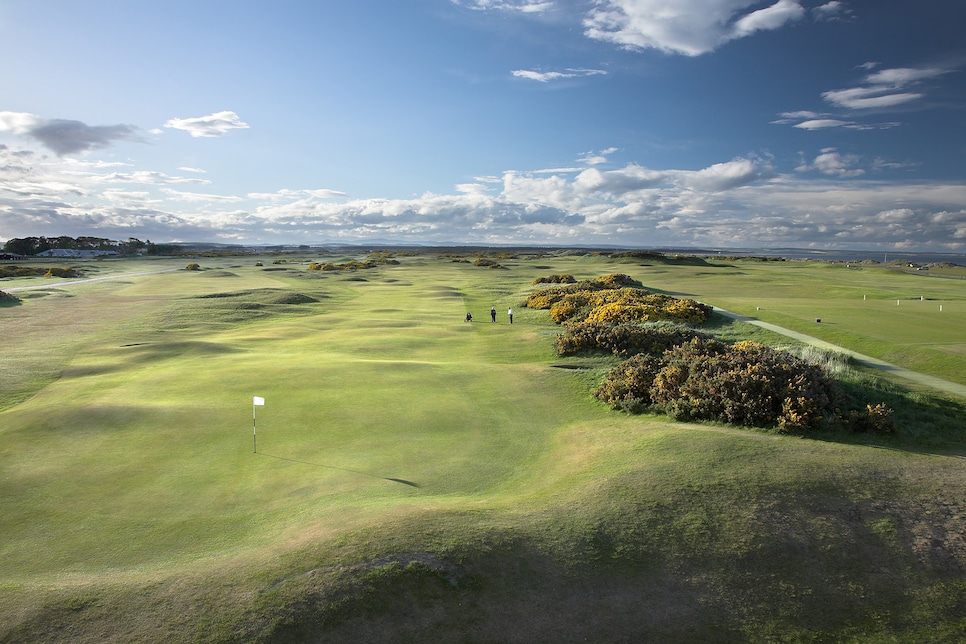
St Andrews · Fife · The Oldest “New” Course in Golf
New Course at St Andrews
Built in 1895 to take the pressure off an overcrowded Old Course, the New is the reason the Old is even called “Old” — before it existed, that famous layout was simply known as “the Links.” Locals still argue it’s the better round of the two.
Venue-specific New Course photography imported into the TGG Media Library.
Why play
Old Tom Morris’s other St Andrews course
Designed by Old Tom Morris with engineer Benjamin Hall Blyth, the New Course opened in April 1895 specifically to relieve pressure on the Old, and runs out toward the Eden Estuary before turning back into town. It has no Swilcan Bridge, no Road Hole, no bunker famous enough to have earned its own name — and plenty of St Andrews regulars will tell you that’s exactly why they prefer it.
Holes 1 to 8 run alongside the Old Course’s fairways, but the New comes into its own from the 6th onward, where the fairway bends right to a green raised slightly above the gorse.
Playing character
Control the ball and use the ground
The 10th, a 450-yard par 4 that often plays into the wind, is where the course shows its teeth — a genuine test of a controlled, low approach rather than a high aerial shot. As with all Fife links golf, tee position should be chosen with the next angle in mind rather than for maximum distance.
Respect the pot bunkers and avoid forcing recovery shots from poor positions; when the wind rises, accepting a longer approach from the correct side beats taking on unnecessary risk.
Who it suits
A serious second or third St Andrews round
The New is particularly useful for regular club golfers who want another credible links test within walking distance of the wider St Andrews golf experience, and for anyone who’d rather judge St Andrews on its golf than its history alone. Select tees appropriate to the conditions and allow more time than the raw yardage suggests when the wind is strong.
Stay · Play · Recover
Use it to balance the itinerary
Build the New Course between the Old, Jubilee and other Fife links rather than scheduling every demanding round consecutively. Hydration, lower-leg mobility and sufficient sleep become increasingly important across a walking-heavy St Andrews break.
Before you book
Check current visitor arrangements
Tee-time access, green fees, seasonal availability, handicap requirements and course closures can change. Confirm the current St Andrews Links arrangements before booking travel and accommodation.
Who it suits
Best fit for the trip
Links & coastal golf
For golfers who enjoy the variety and weather that often shape seaside rounds.
Golf breaks
For travellers combining golf with accommodation; confirm current package inclusions.
Regional golf itineraries
For golfers building a wider trip around the course and other nearby attractions.
Small golf groups
For groups that value clear advance planning, tee-time confirmation and arrival arrangements.
Contact & directions
Plan your visit
Current contact details have not yet been verified for this profile. Please check the club’s official information before planning your journey.
Check visitor access, tee-time availability, current green fees and any hire requirements directly with the club.
Open the map search to locate the club. We will add a precise map when the course address has been verified.
Accommodation & golf breaks
Stay, play & relax
If you are considering a golf break, compare accommodation options with the course’s visitor tee-time availability. Check whether any package actually includes a round, and what is included for non-golfers.
Confirm your room, tee times, facilities and any spa access directly with the providers before committing to your trip.
