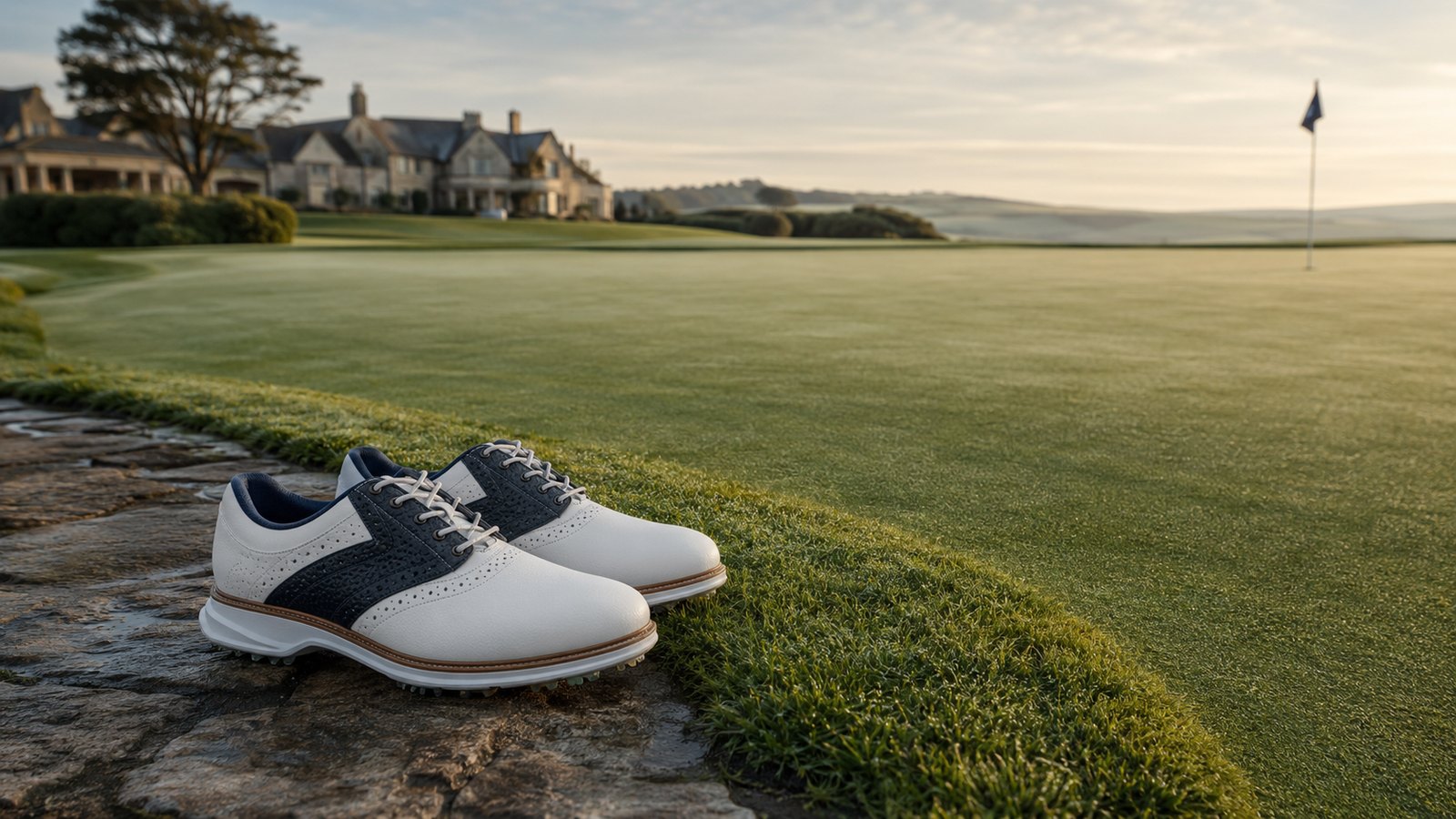
Golf shoes that make every round better.
Good traction. A comfortable walk. The right support for the courses you actually play. Start there—not with a logo on the side.
Start from the ground up.
Four hours on your feet. A changing lie at almost every hole. Wet grass, sandy paths, firm tees and the need for a secure stance through the swing.
The right golf shoe balances traction with walking comfort. Fit matters before any claims about distance, stability or technology.

Three things worth paying for.
A pair that feels wrong in the shop rarely improves after the fourth hole.
A secure fit
Walk in your normal golf socks. Your heel should feel supported, with room for toes and no pinching across the forefoot. Check width options if standard fits feel restrictive.
Predictable grip
Choose a sole that suits your usual turf, slopes and weather. More aggressive traction may help on soft ground; a versatile spikeless sole can work well on firm courses.
All-round comfort
Weight, breathability, cushioning and underfoot support matter across 18 holes. A rigid shoe is not automatically a more stable one for your swing.
Summer shoes. Winter shoes.
A single pair can be practical year-round, but British golf asks different things of footwear in July and January.
Keep it light and breathable.
For warm, firm parkland or resort golf, consider ventilation, flexible soles and comfort over a long walk. Spikeless models can be especially convenient off the course, provided the outsole has dependable grip.
Keep your footing.
On muddy paths, wet slopes and soft fairways, reliable traction, easy cleaning and properly waterproof construction move up the list. Inspect seals, seams, laces and the manufacturer’s waterproof terms.
What should you know before buying?
What do professional golfers look for?
Fit, traction, repeatable footwork and stability matter at elite level, but preferences differ. Tour sponsorships also influence what players wear. Use a professional’s choice as inspiration, not proof that the same shoe is right for you.
Removable soft spikes or spikeless?
Replaceable soft cleats can offer grip on softer, wetter ground and let you renew worn traction. Spikeless outsoles use moulded lugs and can be more versatile, but patterns vary. Metal spikes are restricted at many clubs, so check local rules.
Which shoes suit golfers just starting out?
Prioritise fit, comfort, an affordable price and enough grip for the courses being played. No beginner needs to spend heavily on the most technical model. Try both spiked and spikeless before choosing.
What about junior golfers?
Choose the correct fit today rather than shoes that are far too large to grow into. Easy fastenings, comfortable walking and suitable traction matter most. Check the fit regularly as feet grow.
Do slip-on golf shoes work?
They can, if the heel stays secure when walking and swinging, the sole grips the turf and the fit is stable. Some easy-entry designs may not give every golfer enough lockdown, especially on slopes or wet ground.
Is waterproof the same as water-resistant?
No. Water resistance may handle dew or a light shower; waterproof construction is designed for more demanding exposure. Review the construction, care instructions and any waterproof warranty rather than relying on a marketing label.
How should a golf shoe fit?
Try on both shoes late in the day if possible, with golf socks. Walk, turn and mimic your stance. A heel that slips, a compressed forefoot or a pressure point is a reason to try another fit.
When should I replace a pair?
Look for tread or cleats worn smooth, loss of grip, a separating sole, persistent discomfort or failed waterproofing. Cleaning and replacing removable cleats can extend the useful life of an otherwise sound pair.
Good footwear should disappear into the round.
You should remember the course, the company and the shots—not the blisters. For a first pair, choose a trustworthy everyday fit. For frequent winter golf or golf travel, a second pair for different conditions may be worth considering.
Explore the equipment that fits your game.
Discover independent buying guidance across footwear, apparel, clubs and golf technology.
Editorial buying guidance, prepared for the 2027 season. This is not a laboratory or on-course test of every model. For earlier model comparisons, see our 2026 golf shoes guide. Check current product specifications, availability and prices independently.
Disclosure: Some links may be affiliate links. The Global Golfer may earn a commission at no extra cost to you.
