

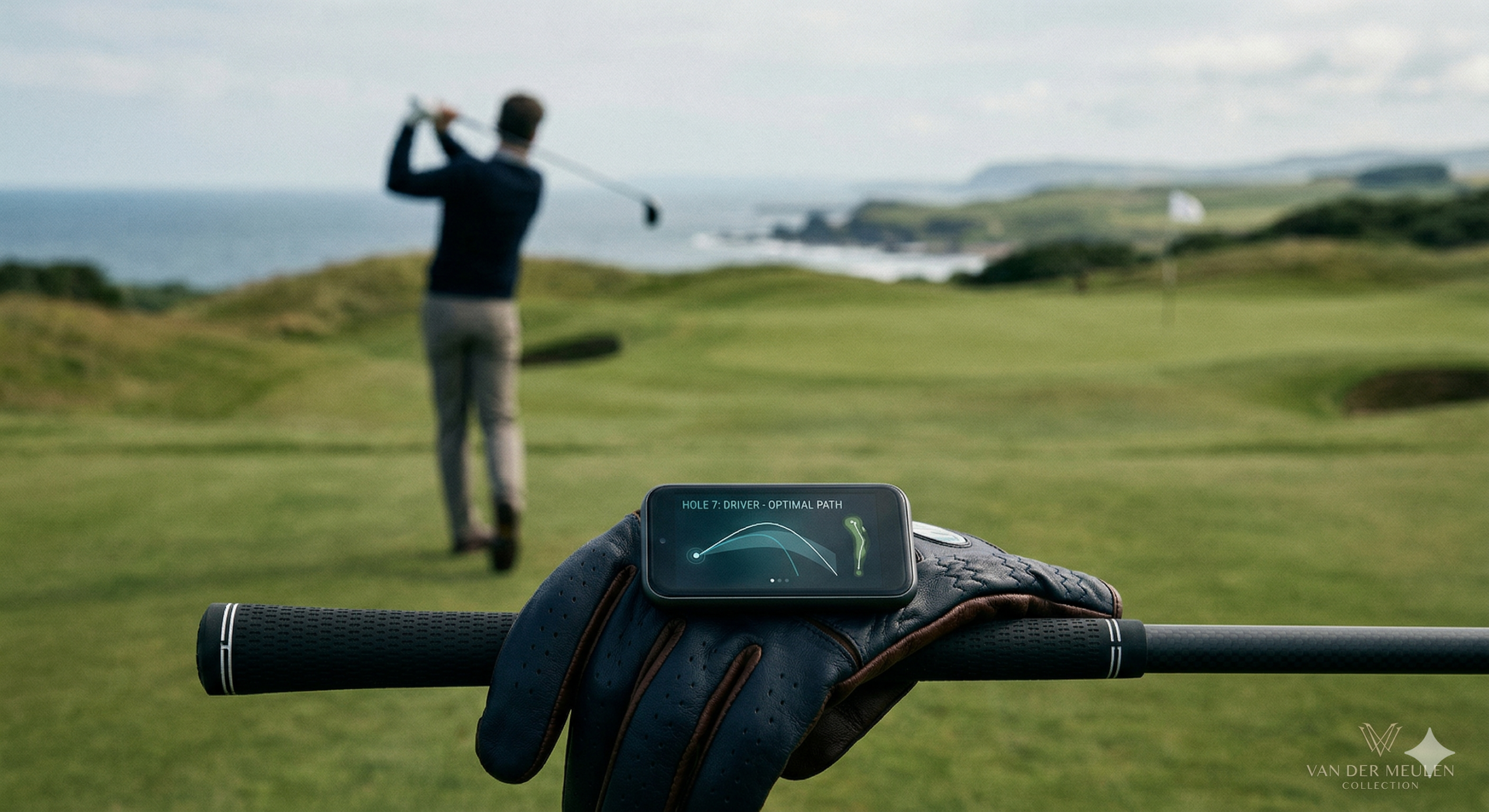
The intersection of heritage and high technology has reached a tipping point in the world of golf. Where the sport once relied solely on the intuition of the caddie and the steady hand of the greenskeeper, a more precise architecture is emerging. Artificial intelligence, far from being a clinical intrusion, is proving to be a sophisticated ally for the discerning golfer. It is a transition defined by data-driven elegance—tools that offer granular insights into one’s biomechanics and course management systems that prioritize environmental stewardship through predictive modeling.
This shift is not about replacing the soul of the game, but rather clarifying it. From the tailoring of club-head aerodynamics to the invisible algorithms maintaining the emerald fescue of the world’s most prestigious tracks, AI is operating with a quiet excellence. For the global golfer, this means a more efficient path to mastery and a more sustainable future for the landscapes we frequent. Our edit explores the most refined applications of this technology, focusing on performance, design, and the subtle art of the digital coach.
The technical edit: Performance and design
1. Arccos Caddie Link Gen 3
Type: Wearable Tech Why it made the edit: This is the gold standard for data-driven play, offering a seamless way to track every shot without the distraction of a smartphone. The AI Caddie provides real-time club recommendations based on personal history and environmental factors. Best for: The analytical golfer seeking a tailored strategy. Signature detail: The subtle vibration on the beltline confirming a shot has been recorded. Price positioning: Premium Action: [Explore the piece] | [View details]
2. Callaway Paradym Ai Smoke Irons
Type: Equipment Why it made the edit: Developed using the Ai Smart Face™, these clubs utilize data from thousands of actual golfer swings to create a face that optimizes launch and spin across the entire surface, not just the center. Best for: Consistency across the scorecard. Signature detail: The intricate, micro-textured pattern on the clubface. Price positioning: Luxury Action: [Explore the piece] | [View rates]
3. Full Swing KIT Launch Monitor
Type: Performance hardware Why it made the edit: Originally engineered to meet the standards of Tiger Woods, this unit uses machine learning to process 16 points of radar data in an instant, providing hotel-grade professional feedback in a portable form. Best for: Refining the swing at home or on the range. Signature detail: The crisp, high-resolution OLED display that rivals high-end watch faces. Price positioning: Ultra-luxury Action: [Explore the piece] | [View details]
4. Golf Genius Tournament Management
Type: Service/Software Why it made the edit: Behind the scenes of the world’s best clubs, this AI-enhanced software manages the complexities of tournament play and live scoring with understated efficiency. Best for: Club captains and event organizers. Signature detail: The effortless transition of live leaderboards across mobile devices. Price positioning: Premium Action: [Explore details] | [View rates]
5. POGO Turf Pro
Type: Course Management Why it made the edit: While invisible to the player, this system uses AI to map moisture, salinity, and temperature, allowing courses to reduce water usage while maintaining spa-grade turf quality. Best for: Environmentally conscious club management. Signature detail: The vibrant, heat-mapped data visualisations of the fairway. Price positioning: Ultra-luxury Action: [Explore details]
6. WHOOP 4.0 with Golf Insights
Type: Wearable tech Why it made the edit: Understanding recovery is as vital as the swing itself. WHOOP’s algorithms translate physiological data into a “strain” score, helping the global golfer time their peak performance for the first tee. Best for: Holistic wellness and athletic longevity. Signature detail: The understated, hardware-free knit band that sits discreetly under a polo cuff. Price positioning: Premium Action: [Explore the piece] | [View details]
How we choose
Our selection process is governed by a commitment to longevity and utility. We prioritize technologies that integrate seamlessly into the lifestyle of the global golfer, favoring tools that provide actionable insights over those that offer mere novelty. Each recommendation is vetted for its craftsmanship, the integrity of its data, and its ability to enhance the game without compromising its traditions.
Frequently asked questions
How is AI used in golf club design? AI allows manufacturers to run millions of virtual simulations, testing how different face thicknesses and geometries react to various swing types. This results in “smarter” equipment that can compensate for off-center hits more effectively than traditional designs.
Can AI truly replace a human golf coach? While AI provides exceptional data and identifies patterns in body mechanics, it is best viewed as a digital assistant. It offers the “what” and the “where,” but the nuanced “how” often still benefits from the eye of a seasoned professional.
Is AI technology making golf courses more sustainable? Yes. Through predictive algorithms, course managers can now identify exactly which areas of a green require water or nutrients. This prevents over-saturation and significantly reduces the chemical footprint of high-end golf courses.
What is the best AI tool for a high-handicap golfer? We recommend starting with an AI-driven shot tracker like Arccos. The ability to see an objective “map” of your game often reveals that the path to a lower handicap lies in better club selection rather than a faster swing.
Shop the edit
A curated selection of our preferred technical companions for the season ahead.
- Golf Basket: [Explore the full selection]
- Arccos Golf: [View details]
- Callaway Golf: [Explore the piece]
Some links may generate commission. All selections are editorially chosen.
Disclosure: Some links may be affiliate links. The Global Golfer may earn a commission at no extra cost to you.