

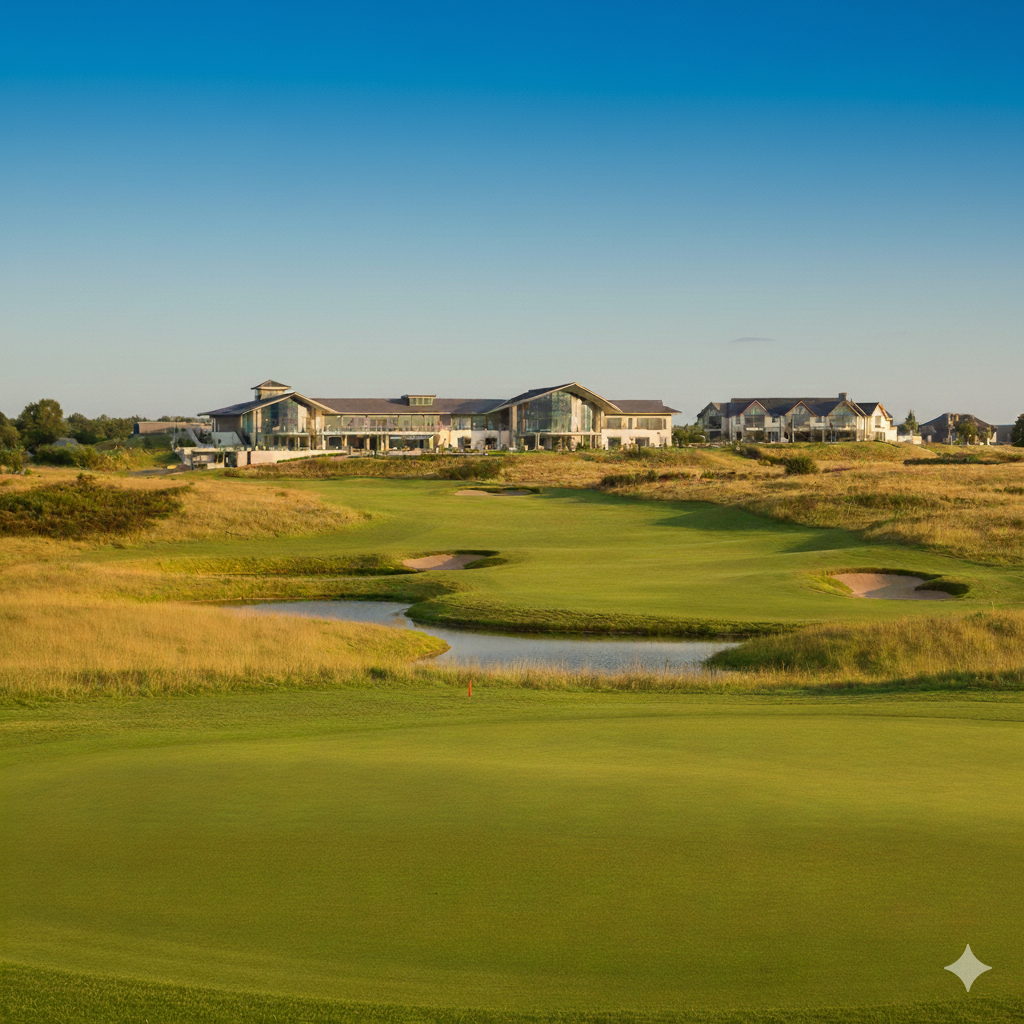
Three courses. One compelling Welsh golf destination.
The resort has three full courses. The Twenty Ten is the Ryder Cup layout and measures 7,493 yards from the back tees at par 71. It was designed in two stages by Robert Trent Jones Jr and Ross McMurray, with a mixture of open, links-like early holes, lake-lined middle sections and a demanding closing stretch. Water hazards influence roughly half the course.
Roman Road is a Robert Trent Jones Sr parkland course with its own professional-tournament history. The Montgomerie, designed by Colin Montgomerie, adds more elevation change, pot bunkering and strong Usk Valley views. For a first visit, however, the Twenty Ten should be the strategic focus because the clubhouse, practice experience and Ryder Cup history make it distinct from a normal resort round.
The Twenty Ten
The purpose-built Ryder Cup course: expansive, strategic and shaped by water, match-play decisions and a memorable stadium finish.
Roman Road
Robert Trent Jones Sr design with professional-tournament pedigree and a more traditional parkland rhythm.
The Montgomerie
Elevation changes, pot bunkers and panoramic Usk Valley views define Colin Montgomerie’s course.
A Ryder Cup course built for decisive golf
Hole-by-hole: Twenty Ten playing notes
1st · Par 4
The dogleg-left opener rewards a drive that challenges the left-side bunkers, but there is no need to force the issue. A fairway ball is more valuable than a heroic angle from sand; the protected green and run-offs punish an indifferent approach.
2nd · Par 5
Long and narrow. Keep the tee shot straight and treat it as a disciplined three-shot par five unless the second is genuinely comfortable. Steep run-offs can turn a slightly missed attack into a difficult recovery.
3rd · Par 3
Water guards the front and left, with sand opposite. Take enough club to carry the hazard, but avoid becoming so aggressive that the difficult long recovery comes into play.
4th · Par 4
This strong par four can play longer than it appears into the wind. A solid fairway drive and conservative distance control into the contoured green are more useful than chasing a tucked flag.
5th · Par 4
Finding the fairway is critical because the approach crosses a stream. Short can feed back towards water, while long leaves an awkward recovery. The middle of the green is a good target.
6th · Par 4
Water runs down the right from tee to green. The aggressive line can leave a short iron, but the percentage play is centre-left. Choose the risk level before you swing.
7th · Par 3
A long par three to a relatively small target. In wind it may require far more club than expected. Missing slightly right can be preferable to the heavier rough left; the priority is enough carry.
8th · Par 4
Bunkering makes the tee shot appear tight. Favour the left half of the fairway. The green falls strongly from right to left, and a miss right leaves a demanding short-game recovery.
9th · Par 5
A very long par five with the Usk side influencing the left and bunkering shaping the right. Most golfers should position the drive, lay up to a comfortable wedge distance and avoid turning length into unnecessary risk.
10th · Par 3
The green slopes from the back and from right to left, while swirling wind complicates club selection. Aim for the correct section rather than merely the flag.
11th · Par 5
Downhill and potentially attackable after a strong drive, but water left and a bunker right shape the decision. If the tee shot is not ideal, lay up rather than forcing the second.
12th · Par 4
The approach plays uphill across a lake, making under-clubbing the obvious mistake. Take enough club to clear the hazard and accept the middle of the green.
13th · Par 3
Another lake carry. A right-hand flag tempts play towards the water, while bunkering waits left-rear. Choose a target that guarantees the carry and gives you a putt.
14th · Par 4
The classic risk-and-reward hole. Water influences the tee shot on the right and flips sides for the approach. Play left for the conservative route; challenge the water only when the carry and shape suit your normal game.
15th · Par 4
A short match-play hole where longer hitters may consider the direct route. The aggressive line brings stream, mounding and heavy rough into play; choose one strategy and commit.
16th · Par 4
Long and demanding. Carry the left-side bunkering if your line requires it, then favour the left on approach because the green slopes significantly from left to right.
17th · Par 3
A long par three to an elongated, two-level green. Distance control matters more than flag-hunting; the wrong tier creates a difficult putt and a miss right leaves a demanding recovery.
18th · Par 5
A memorable finish with water and bunkering protecting the green. A strong drive can create a chance to reach in two, but a lay-up must leave a yardage from which trajectory and spin can be controlled.
Do not rush the Twenty Ten arrival
The dedicated clubhouse, practice access and Ryder Cup setting are part of the experience. Arrive with enough time to use the warm-up facilities, settle into the scale of the property and reach the first tee without hurrying.
Why Celtic Manor works
It is one of Britain’s strongest dual-benefit resorts: three courses for golfers, with accommodation, dining and spa facilities that also work for couples and mixed groups.
Plan your Celtic Manor golf visit
The Usk Valley
Newport, South Wales
NP18 1HQ
For golf arrangements, course questions and visit planning.